
SoEasy Match: Home Rescue
SOFISH GAMESCasual
4.961.00 Reviews
- Version
- 1.0.8
- Installs
- 100.00K
- Age Rating
- Everyone
Screenshots
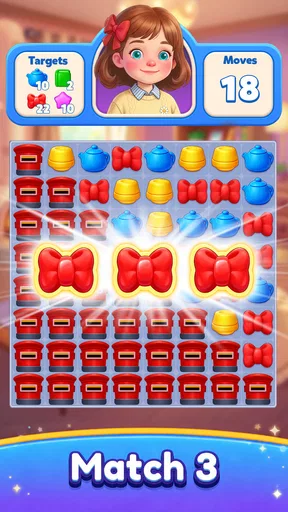
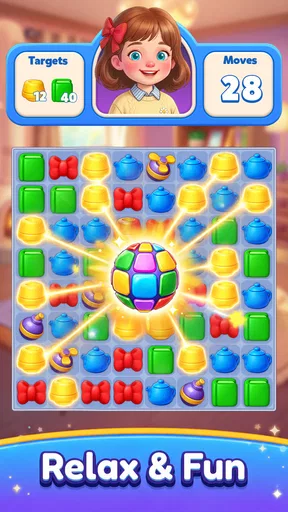
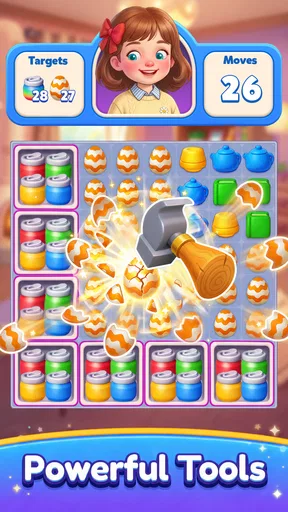
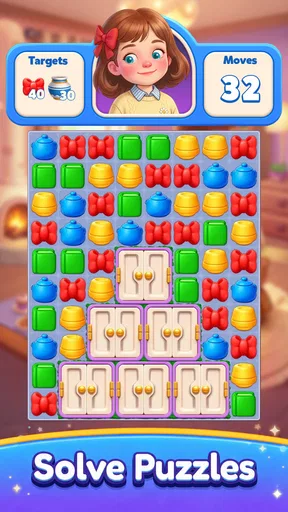
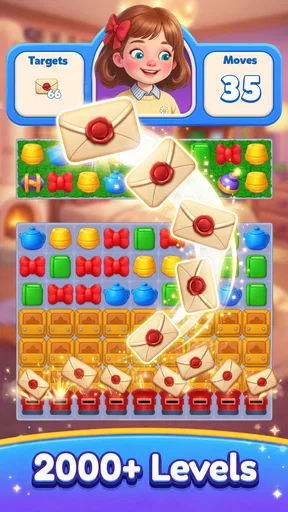
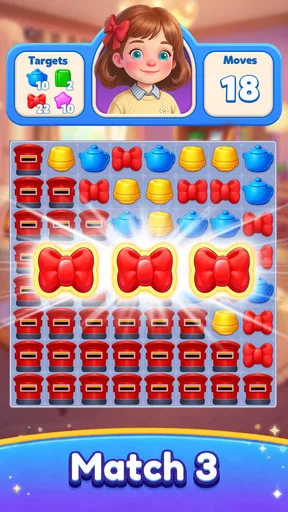
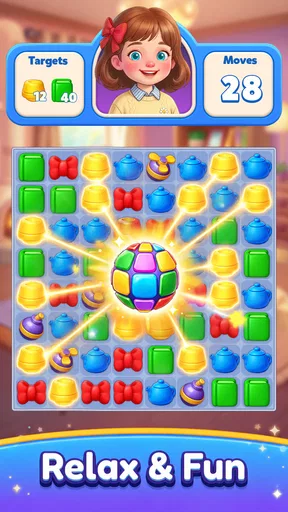
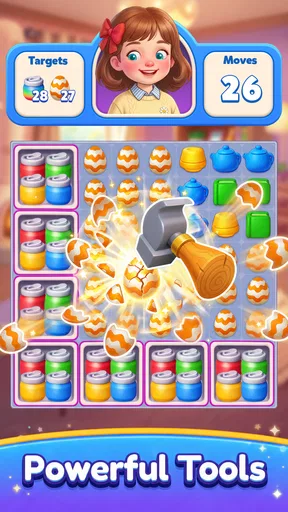
Our Review of SoEasy Match: Home Rescue
 Analysis by Appyee
I went into SoEasy Match: Home Rescue expecting a light match-3 game, and that is exactly where it feels most comfortable. The basic idea is easy to understand: make matching moves, earn stars, and use that progress to bring homes back to life while following a warmer story thread. What makes it pleasant is not a complicated rule set, but the way each small puzzle win feeds into a larger restoration goal.
That combination makes it a good fit for short breaks. I can imagine opening it while waiting for an appointment, playing a few boards after dinner, or using it as a gentle way to switch off before bed. It belongs firmly in the casual game space, and the Everyone age rating reflects how approachable the presentation is. At the same time, the home-restoration layer gives the usual match-3 routine a little more purpose than simply clearing another board.
My overall impression is positive, with an important qualification: this is best for someone who enjoys a relaxed puzzle loop and visible progress, not for a player searching for deep strategy, competitive action, or a completely uninterrupted free experience. The game is free to start, but optional purchases range from $0.99 to $99.99 per item, so I would approach the purchase options carefully and decide in advance whether I want to spend anything.
How the everyday puzzle-and-restoration loop works
The most useful way to play is to treat the game as two connected activities. The match-3 board is the immediate task, while the home work provides the longer-term reason to keep going. I found that separating those goals mentally helps. When I focus only on finishing a board, a difficult attempt can feel frustrating. When I remember that each successful stage contributes to a visible restoration journey, the same attempt feels more like one step in a wider project.
The opening experience is easy to approach because the central action does not require a long explanation. You look for matching pieces, plan a move, and try to clear the objective. That simplicity is a strength for casual players, families, and anyone who does not want to learn several systems before having fun. It also means the game can be picked up after a few days away without demanding that I relearn a complicated control scheme.
I recommend beginning each session by checking what the current board is asking me to do rather than making the first obvious match immediately. In match-3 games, the most visible move is not always the most useful one. A match near the bottom can shift more pieces and create better opportunities above it, while a quick match at the top may solve very little. This small pause is one of the easiest habits for improving results without turning a casual game into a serious study exercise.
The restoration structure also changes how I judge progress. A player who likes decorating, repairing, or watching a place become more complete will probably find more motivation here than someone who only wants endless standalone puzzles. The story element adds emotional context, but it does not replace the puzzle loop. If you dislike narrative interruptions or home-improvement themes, the game may feel less appealing even when the boards themselves are enjoyable.
For an everyday scenario, I would use it during a ten-minute commute or a short lunch break. I would start with one or two boards, stop before rushing a difficult move, and return later when I felt more patient. That approach suits the game better than treating every session as a long marathon. The casual format works best when the game fills spare time rather than taking over the entire evening.
What I would check before settling into a routine
The first practical detail is device compatibility. The game requires Android 6.0 or later, which covers many older devices but still makes it worth checking the operating system before installing. The current version is 1.0.8, so I would also keep the app updated through the normal store process. Updates can matter in puzzle games because small interface or stability improvements are particularly noticeable when a board depends on precise taps.
I would also look at the sound and notification controls as soon as I opened the game. I do not want bright effects or game audio competing with a podcast, a quiet room, or a public setting. If the available controls let me reduce those distractions, that immediately makes the game more flexible. I would not assume every setting exists, though; I would inspect the actual options rather than searching for a control that may not be there.
Another useful check is the purchase flow. Since the game is free to download but includes optional items priced from $0.99 to $99.99, I would review the purchase settings on the device before handing it to a child or family member. The Everyone rating describes the content, not a promise that every player will make sensible spending choices. A simple screen-lock or purchase-authentication habit is more useful than relying on good intentions.
I also prefer to test the game in the exact environment where I expect to play it. If I plan to use it during travel, I would try it before leaving rather than assuming every part of the experience will suit an unreliable connection or limited battery. I would check how quickly boards load, whether the display is comfortable at low brightness, and whether the touch controls feel accurate on my phone. Those are ordinary checks, but they often determine whether a casual game becomes a regular companion.
Because the game is designed around repeated short puzzles, I would avoid starting a board when I know I will need to put the phone down immediately. Even a simple puzzle benefits from a few uninterrupted moments to notice the board and plan the next move. Starting one during a conversation or while crossing a busy area is a poor trade-off. The game is easy to understand, but that does not make distracted play automatically effective.
Small habits that make matches more efficient
My favorite improvement is to scan the whole board before touching anything. I look for possible matches in the lower rows, potential cascades, and moves that might open a blocked area. This takes only a moment, yet it prevents the common mistake of spending the first move on a harmless match that leaves the board in a worse shape. I especially value this habit when the objective seems narrow and every move matters.
I also try to create space before chasing a tempting match. A move that clears several pieces and changes the board can be more valuable than a match that looks larger but leaves the same pattern behind. The best choice depends on the position, so I do not follow a rigid rule such as always playing from the bottom. Instead, I use the bottom-first idea as a starting point and change it when an upper move creates a stronger opening.
A second non-obvious habit is to delay a useful-looking move when it can serve as a backup. If the board already offers a safe match, I may leave it in place while I inspect other possibilities. This gives me more information about the current layout and reduces the chance of wasting a move that could rescue the board later. It is a modest form of planning, but it makes the game feel less random.
I would also avoid tapping quickly just because the next match is obvious. Fast fingers can make a casual game feel more exciting, but they can also remove the chance to notice a better chain. My preferred rhythm is scan, choose, watch the result, then scan again. That repeatable pattern is more reliable than trying to play at maximum speed.
When a board goes badly, I do not immediately assume that spending money is the answer. I first ask whether I missed a better opening, played too quickly, or continued after the board had become unfavorable. Taking a short break can be more effective than forcing another attempt while annoyed. This is especially important in a free-to-start game with optional purchases, because frustration is a poor moment for making a buying decision.
Where the restoration theme helps and where it may not
The home-repair progression gives successful puzzles a clear emotional payoff. Instead of seeing only a score or a completed level, I get the sense that my play is helping a place become more welcoming. That makes the game approachable for players who like gentle stories and visual improvement. It is also a useful reason to return after a difficult session: the next restoration step gives the puzzle another layer of meaning.
However, the same structure will not appeal to everyone. Players who prefer pure board-solving may see the home elements as a pause between the parts they actually enjoy. Others may want more control over decoration choices, while this experience is primarily driven by the match-3 progression. I would choose a more specialized decorating game if personal design freedom were my main priority, and I would choose a harder puzzle title if I wanted every decision to demand careful calculation.
The story is best approached as a companion to the puzzles rather than as a standalone drama. It helps establish a comforting mood and gives the restoration work a reason, but the game’s main satisfaction still comes from solving boards. That balance works for me because I like a little context without needing a long narrative. Someone looking for complex characters or a substantial story may find the focus too light.
There is also a pacing trade-off. Restoration progress can make early sessions feel rewarding, but repeated puzzle attempts may become the dominant experience as I continue. That is normal for this type of game, yet it means the long-term appeal depends on whether the basic matching remains enjoyable after the novelty of the first home improvements fades. I would judge the game by the quality of that core loop, not only by the first attractive restoration moments.
Limits, spending choices, and the right kind of player
The clearest limitation is that free access does not mean a completely purchase-free design. Optional items cost between $0.99 and $99.99 each, which is a wide range. I would play comfortably without buying anything at first and treat purchases as an optional convenience rather than a requirement. Setting a personal rule, such as never buying while frustrated or only spending a fixed small amount, helps keep the relaxed nature of the game intact.
I would recommend it to players who want approachable puzzles, a calm visual goal, and a story about improving homes. It is particularly suitable for short sessions, casual players returning to mobile games, and people who enjoy seeing progress accumulate over time. The Everyone rating also makes it broadly accessible in terms of content, although adults should still manage purchase authentication when children use the device.
I would skip it if I need competitive leaderboards, demanding strategic depth, or a game that feels substantially different from one session to the next. I would also look elsewhere if I dislike energy-style pacing, repeated attempts, or optional purchase prompts in casual games. Those preferences do not make this a bad title; they simply point toward a different kind of experience, such as a premium puzzle game with a single upfront payment or a more mechanically complex matching game.
For players comparing it with familiar match-3 alternatives, the distinction is the home-restoration and story framing. Many casual puzzle games rely mainly on level completion, while this one connects the boards to a more personal rebuilding theme. That can make progression feel warmer, but it does not automatically make the puzzles deeper. My choice would depend on whether I want emotional continuity and visual restoration or a cleaner, more focused puzzle challenge.
The game’s reception suggests that it has found an audience: it holds a 4.9 average from around 1.5 thousand ratings, with over 100 thousand installs. Those figures make it look promising, but I would still treat them as a starting point rather than a substitute for matching the game to my own habits. A highly rated casual game can remain the wrong choice for someone who dislikes its pacing or purchase model.
My verdict after building a repeatable play style
After settling into the scan-and-plan rhythm, I found SoEasy Match: Home Rescue easiest to enjoy when I kept expectations modest. It is not trying to be a massive strategy game. Its strength is the smooth connection between simple matching, small moments of progress, and a home that gradually feels more complete. That makes it a pleasant choice for filling spare minutes without demanding a large commitment from the player.
The most useful advanced approach is not a secret trick; it is consistency. Check the objective, study the lower rows, preserve useful options, and avoid making purchases in the heat of a failed attempt. Those habits improve decision-making while keeping the game casual. They also reveal the main trade-off clearly: better play can reduce frustration, but no habit changes the fact that the experience remains built around repeated match-3 boards.
SOFISH GAMES has positioned this as a friendly, accessible game rather than a specialist puzzle challenge. With a free entry point, an Everyone content rating, and support for Android 6.0 or later, it is easy for many players to try. I would simply pair that accessibility with sensible spending controls and a willingness to stop when the session stops feeling relaxing.
My recommendation is therefore straightforward. Try it if you want a gentle match-3 game with home restoration and heartwarming storytelling, especially for short daily sessions. Keep playing if the rebuilding theme gives your wins extra meaning. Move on to another option if you want deep tactics, unrestricted decorating, or a purchase-free experience. For the right player, it is a comforting little routine; for everyone else, its simplicity may become its biggest limitation.
Verdict
Strengths of SoEasy Match: Home Rescue
- Simple match-3 gameplay that is easy to learn and play casually.
- Home renovation goals add variety beyond completing puzzle levels.
- Bright visuals and cheerful animations make the game feel inviting.
- Short levels work well for quick sessions during breaks.
- Progression gives players a clear reason to keep completing puzzles.
Limitations of SoEasy Match: Home Rescue
- Some levels may become difficult without using boosters or extra moves.
- Energy or waiting systems can interrupt longer play sessions.
- Frequent ads may appear between levels or after failed attempts.
- Limited offline functionality may restrict play when no connection is available.
- Later renovations and upgrades can require substantial in-game resources.
Other Releases by SOFISH GAMES
View All
SoEasy 2248:Number Puzzle 2048
Casual4.9
Similar Picks in This Category
View All
My Talking Angela
Outfit7 Limited4.2

My Talking Tom
Outfit7 Limited4.3

Pou
Zakeh4.2

My Talking Tom 2: Pet Game
Outfit7 Limited4.3

Candy Crush Saga
King4.6

Bridge Race
Supersonic Studios LTD4.1
Frequently Asked Questions
What is SoEasy Match: Home Rescue about?
SoEasy Match: Home Rescue is a casual match-3 puzzle game combined with a home renovation story. You complete levels by matching colorful tiles, earning rewards that can be used to repair, decorate, and improve different spaces. The game is designed for short play sessions, while its characters, renovation tasks, and progressive story provide an additional reason to keep playing beyond the individual puzzles.
How does the match-3 gameplay work?
The main gameplay requires you to match three or more identical pieces to clear them from the board and complete level objectives. Larger combinations can usually create special power-ups capable of clearing rows, columns, or groups of tiles. Each level may include different obstacles, targets, and limited moves, so success depends on planning combinations rather than simply making the quickest available match.
Is SoEasy Match: Home Rescue free to download and play?
The game can generally be downloaded and started without an upfront purchase, but it may include optional in-app purchases. These purchases can provide extra lives, boosters, coins, or other resources that help with difficult levels and renovation progress. Players who prefer not to spend money can continue playing, although they may need to wait for lives to refill or replay stages more often.
Can SoEasy Match: Home Rescue be played offline?
Some basic puzzle sessions may work without a continuous internet connection, but online access can be required for features such as advertisements, cloud saving, purchases, updates, events, or synchronization between devices. Availability may also vary depending on the version installed. For the most reliable experience, it is best to launch the game while connected before attempting to play during travel or in areas with limited reception.
Is SoEasy Match: Home Rescue suitable for children?
SoEasy Match: Home Rescue uses simple matching mechanics and colorful home-design themes that can be approachable for younger players, but parents should still review the store rating and the game's content before installing it. Advertisements, optional purchases, and possible social or online features are important considerations. If children use the app, enabling purchase restrictions and checking privacy permissions is recommended to avoid unintended spending or data sharing.
Play our best games!


